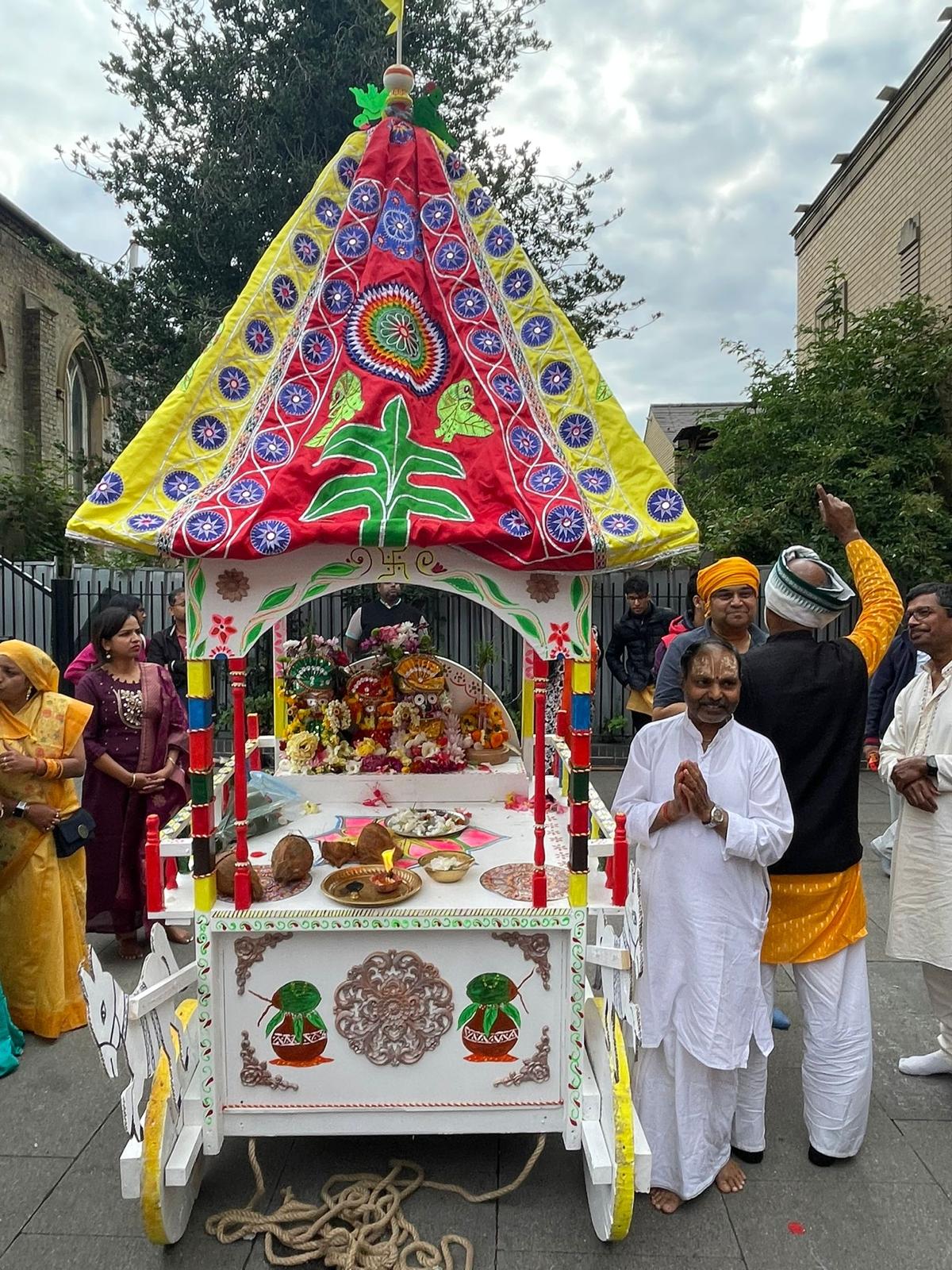
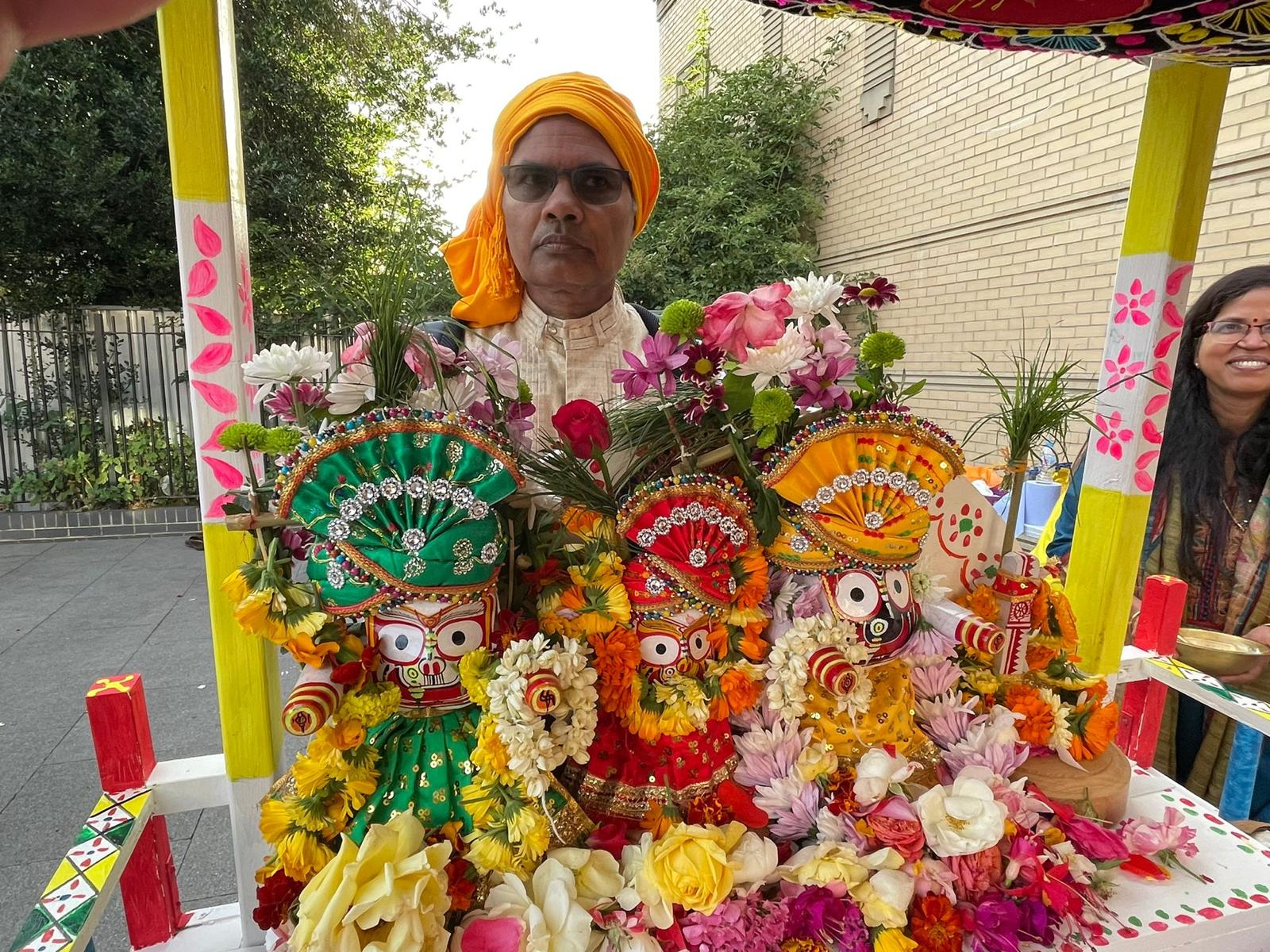
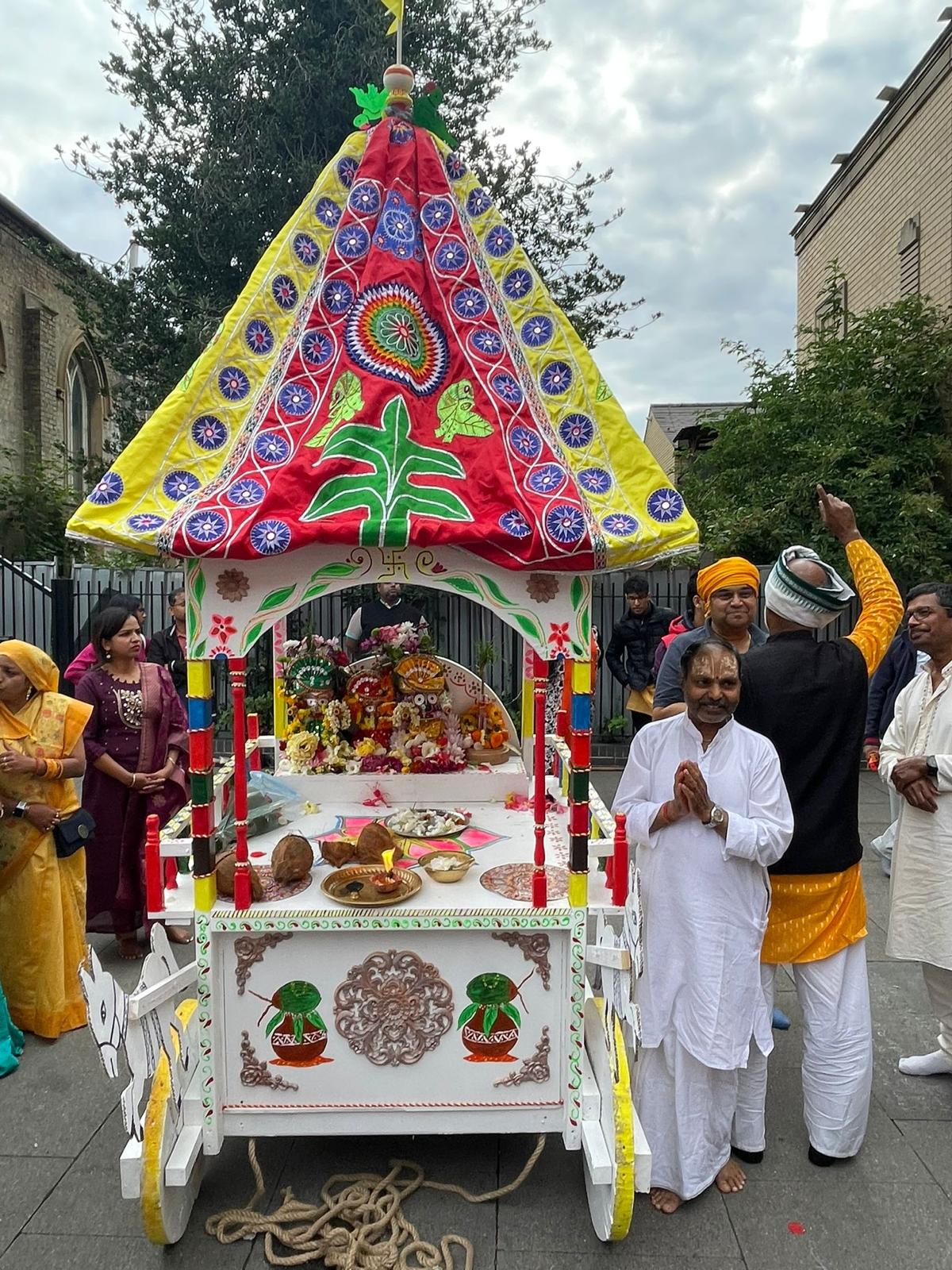
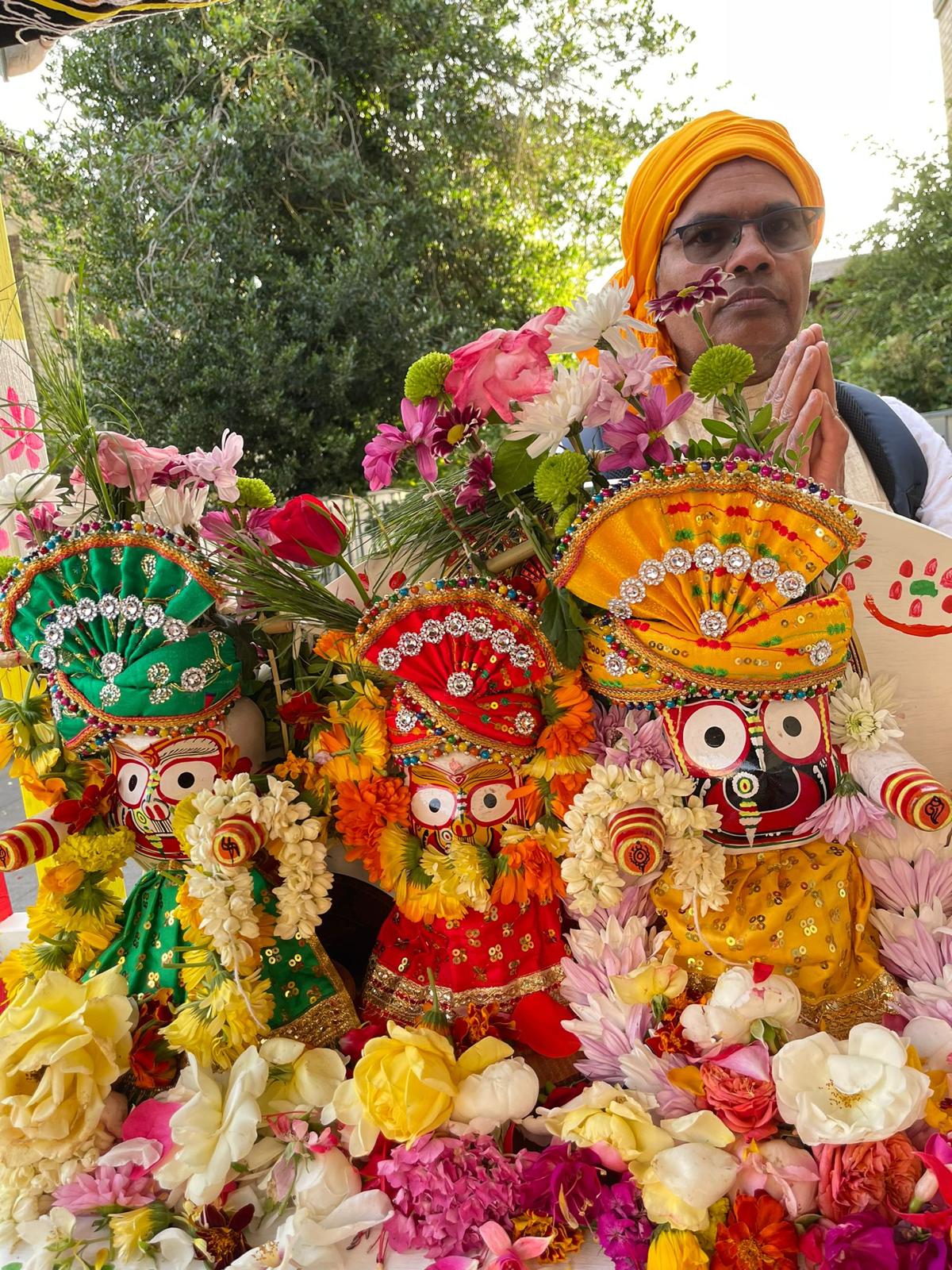
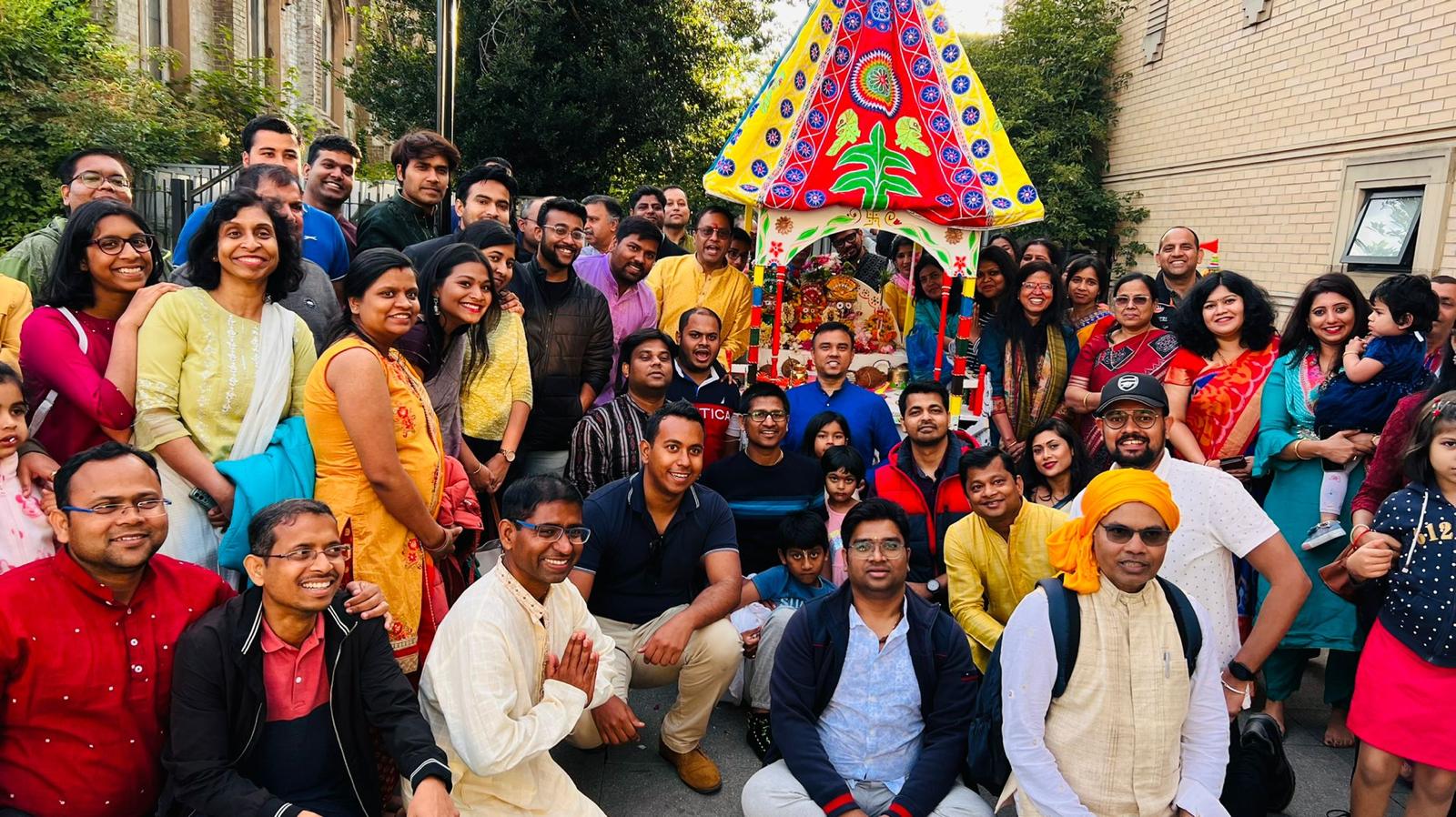
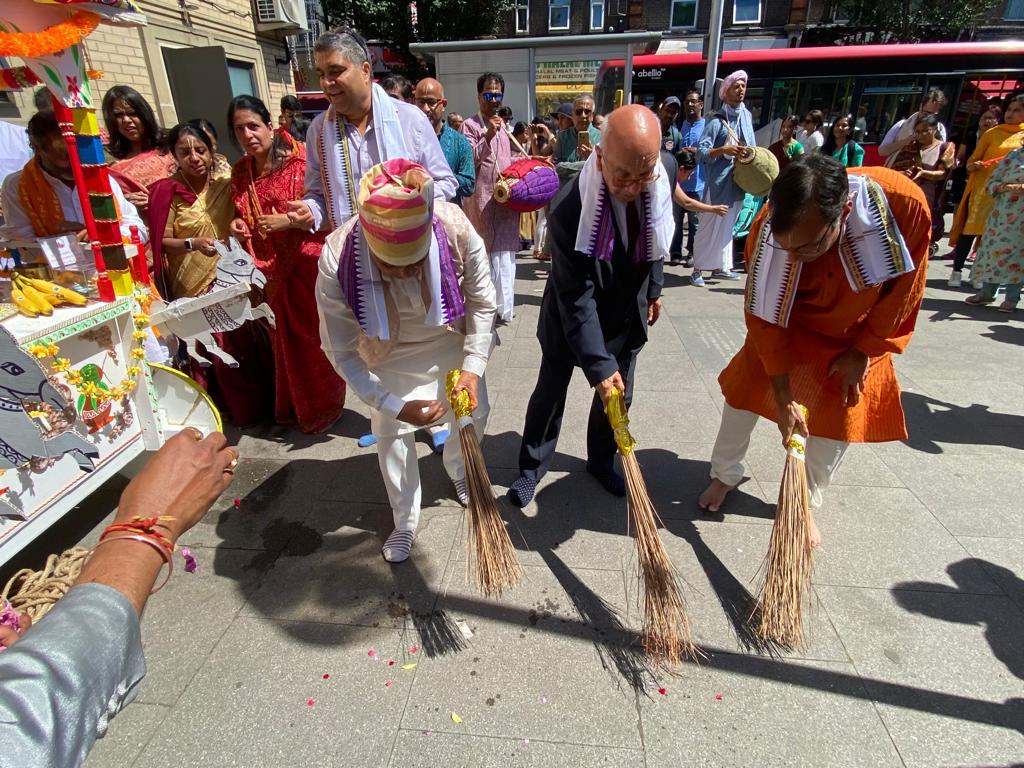
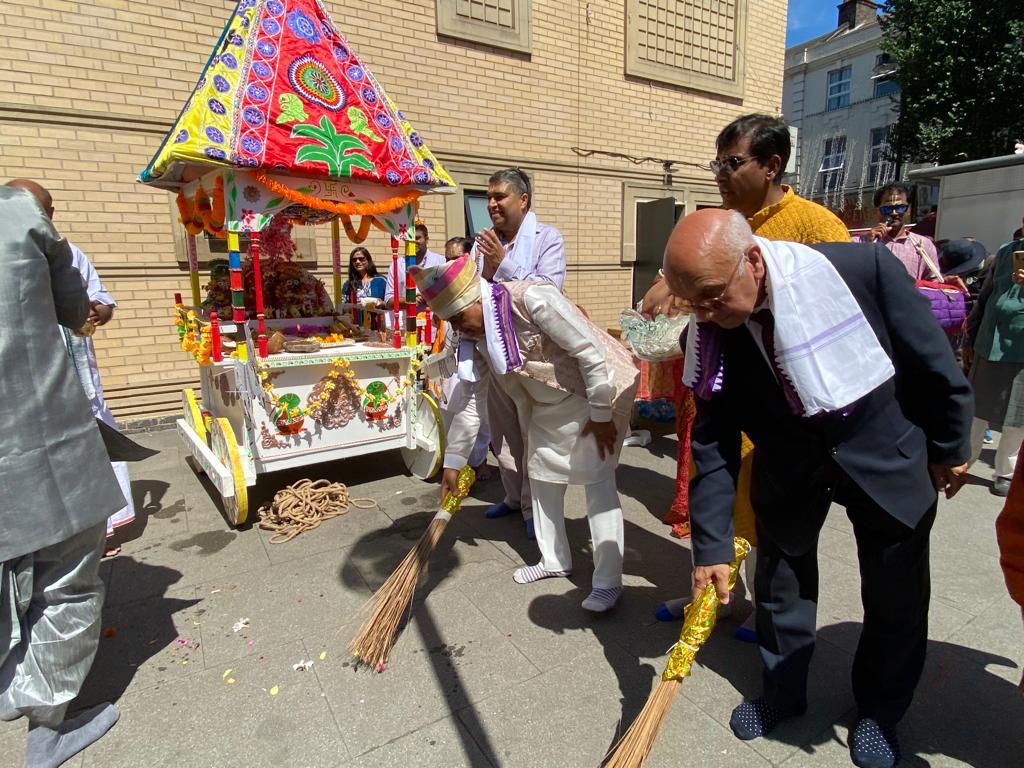
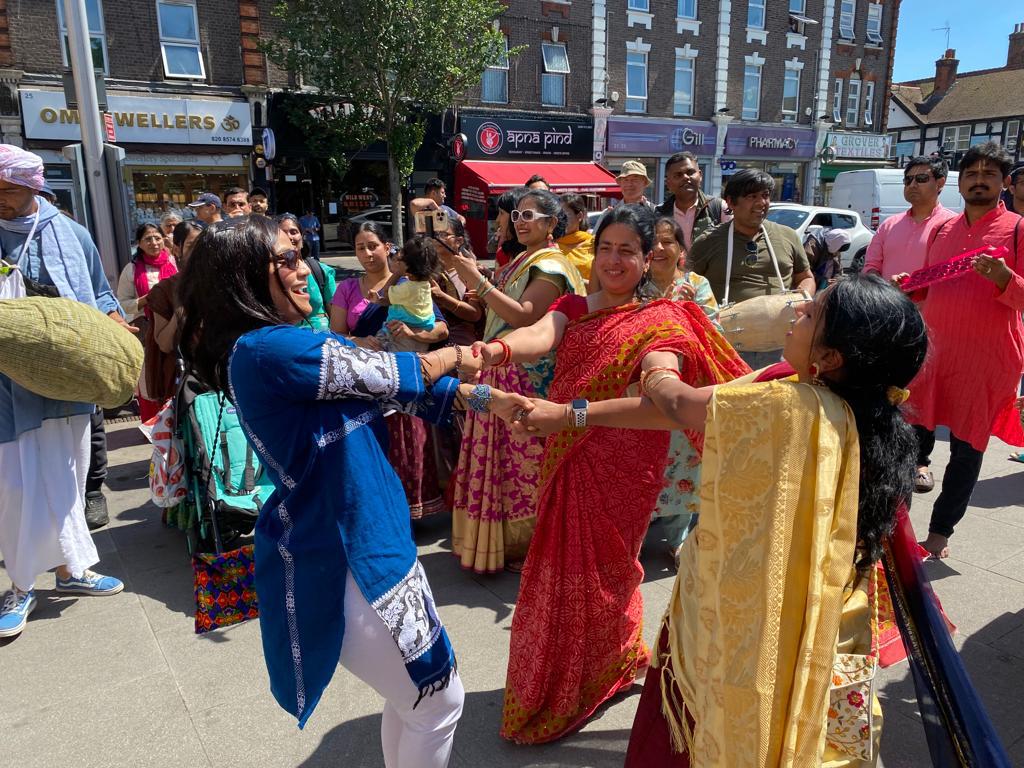
SJSUK's Rath Yatra 2022: The Divine Chariot Festival
The oldest and largest Hindu chariot festival in the world, marking the sacred journey of Lord Jagannath, Lord Balabhadra, and Devi Subhadra.
Event Details
The Divine Chariot Festival
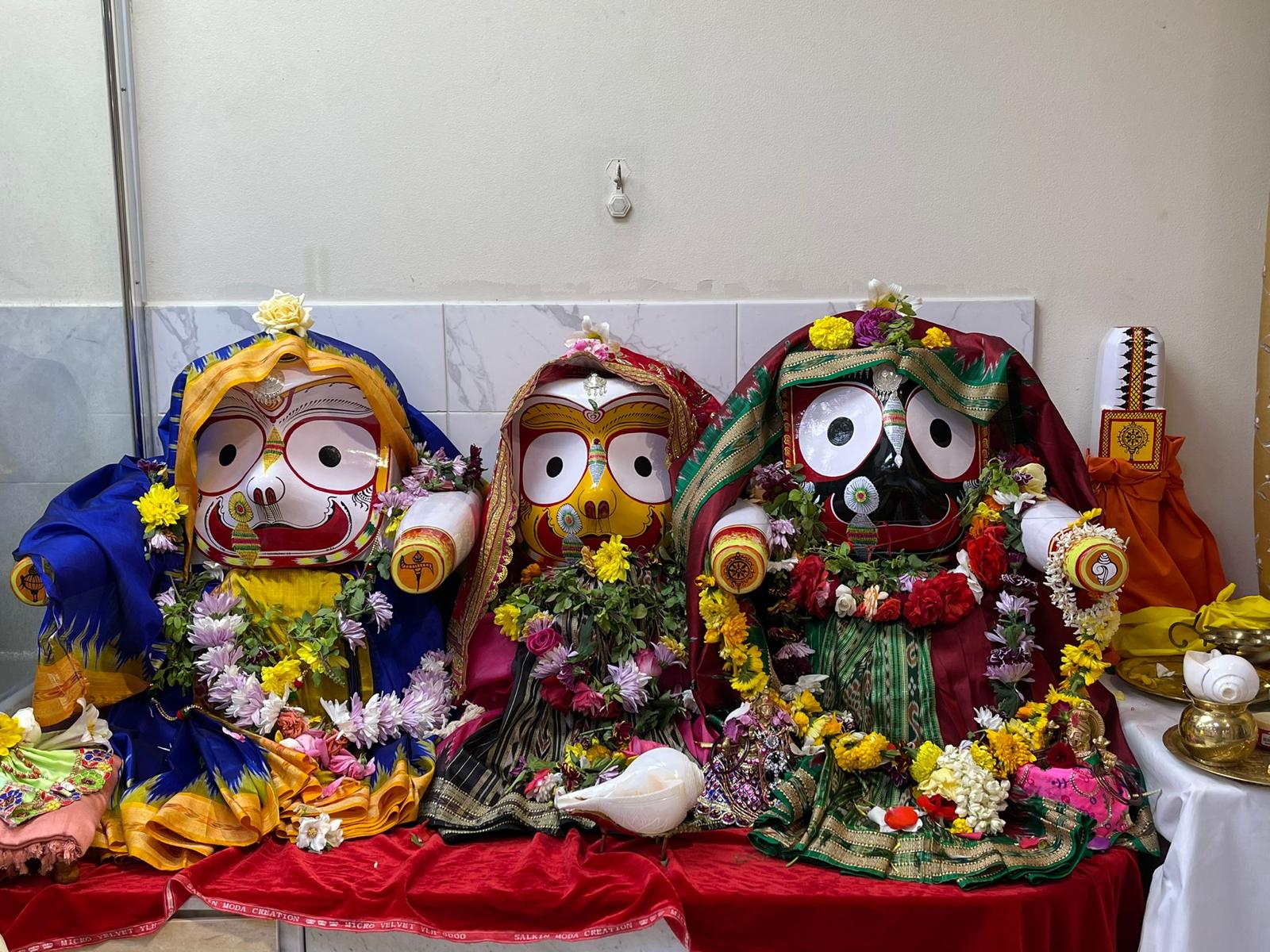
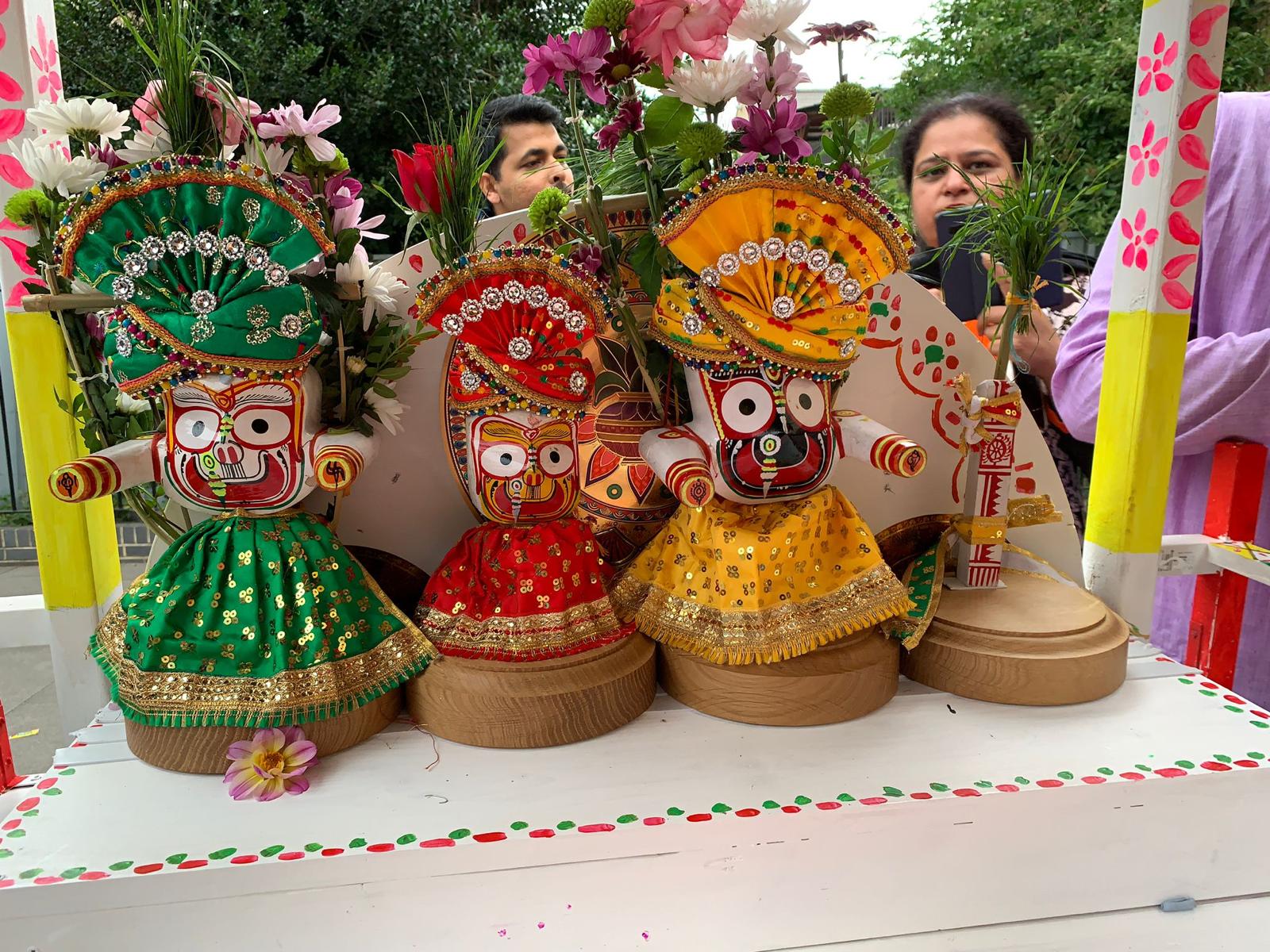
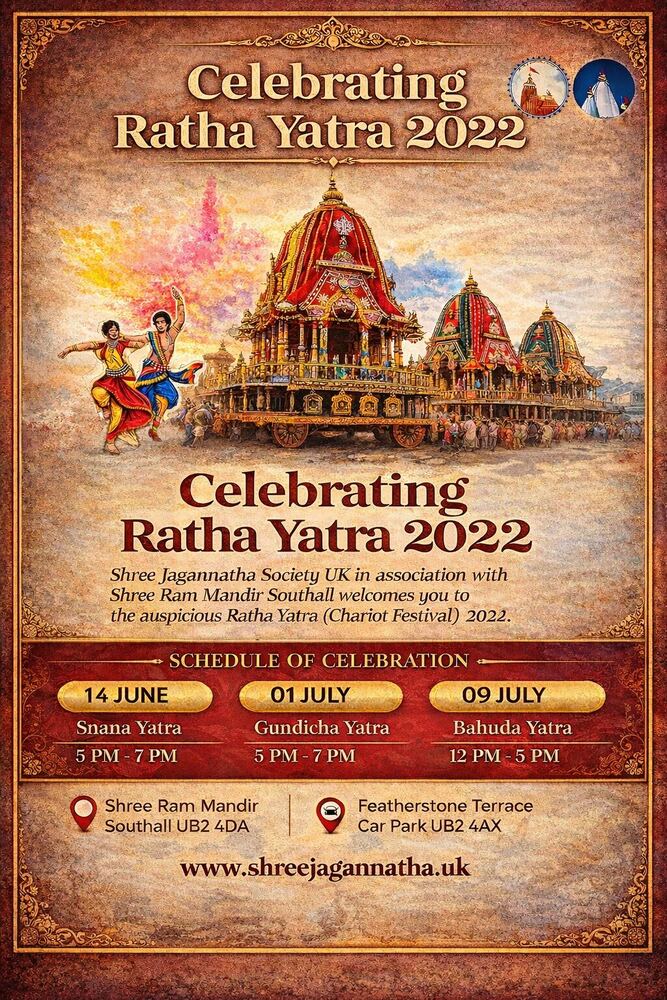
Rath Yatra (Chariot Festival) is the oldest and largest Hindu chariot festival in the world, celebrated annually on the second day of the bright fortnight of the Hindu month of Ashadha (June–July). It marks the sacred journey of Lord Jagannath, Lord Balabhadra, and Devi Subhadra from the Jagannath Temple in Puri to the Gundicha Temple (believed to be the deities' aunt's house), approximately 3 km away on the Grand Road (Bada Danda).
History & Significance
Descriptions of the Rath Yatra are found in ancient texts including the Brahma Purana, Padma Purana, Skanda Purana, and the Kapila Samhita. The festival has been celebrated for over a millennium in Puri, with its origins tracing back to the 12th century. European travellers have documented the festival since the 13th century, with vivid descriptions appearing in 17th-century records.
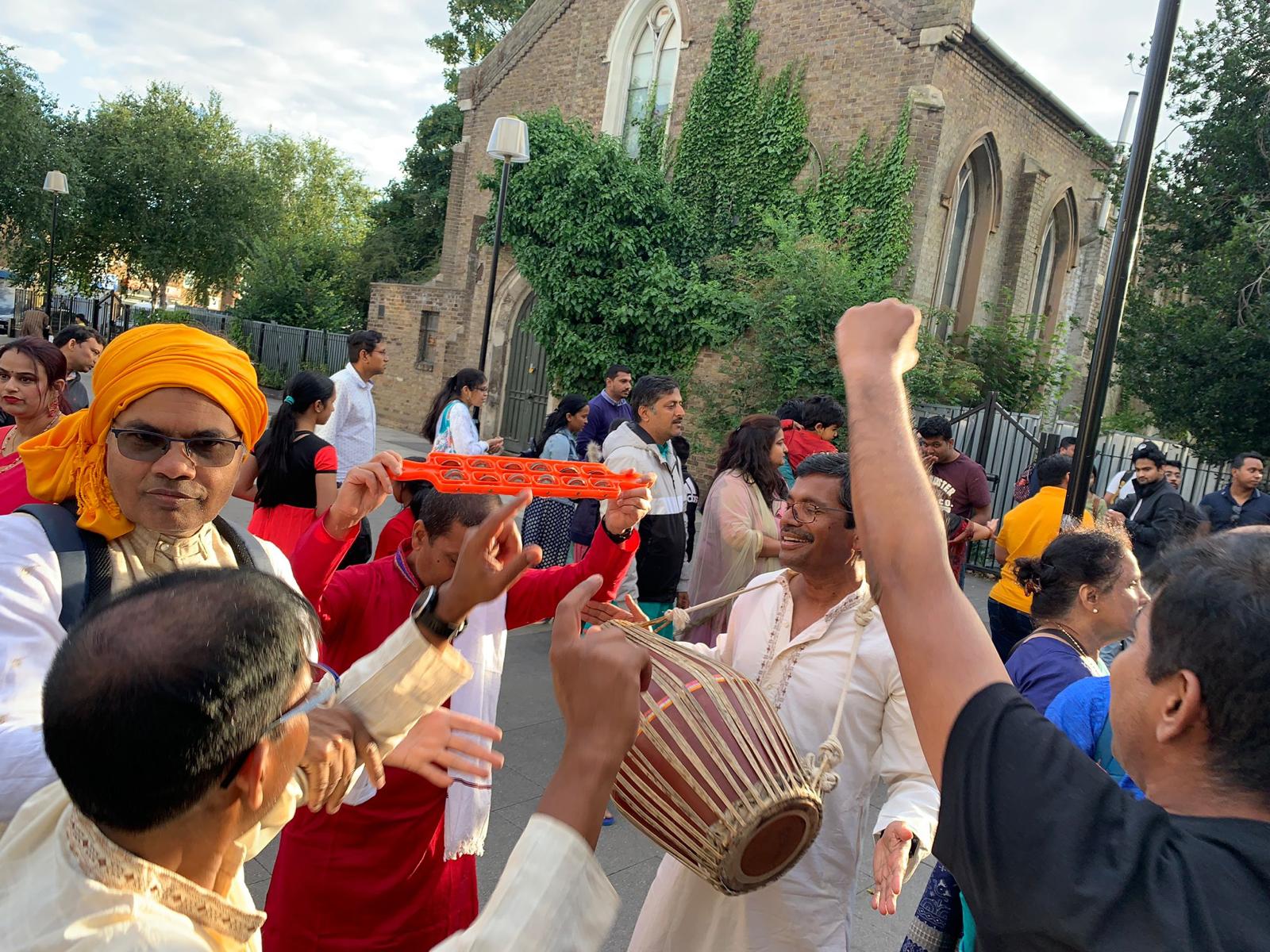
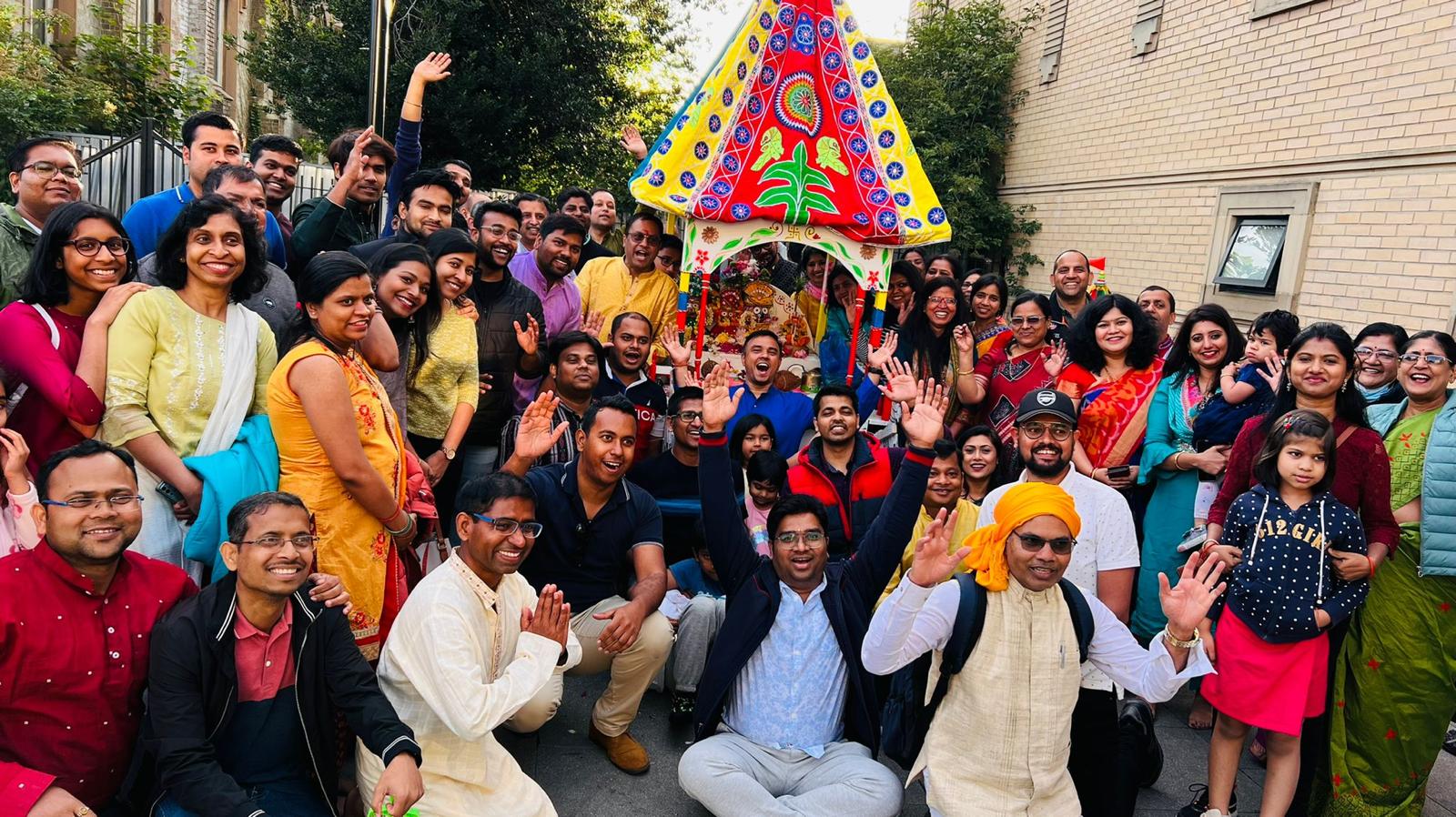
The Rath Yatra's universal appeal lies in its message of equality — during the procession, all devotees, regardless of caste, class, or status, are permitted to touch the ropes and pull the chariots. It is one of the rare occasions in Hindu tradition when deities leave the sanctum to meet their devotees directly.
The Rituals Before the Journey
Snana Purnima
The Grand Bathing — The deities are ceremonially bathed with 108 pots of sacred water drawn from the temple's golden well on the full moon of Jyeshtha. This marks the beginning of the Rath Yatra season.
Anasara
The Sacred Seclusion — After Snana Purnima, the deities fall ill and are secluded for 15 days in the Anasara Ghara, treated with Ayurvedic remedies by Daitapati Sevayats. No public darshan is permitted during this period.
Netra Utsav
The Painting of Eyes — At the end of Anasara, painters ceremonially redraw the eyes of the deities, symbolising their divine rejuvenation and return to full health.
Navajouban Darshan
The Grand Reveal — The deities appear in their renewed, youthful splendour for the first time after seclusion, generating immense excitement among waiting devotees.
Adhar Pana — The Sweet Offering
Adhar Pana is a special sweet rice drink offered to the deities during the Rath Yatra. This sacred offering symbolises the devotees' love and devotion. The drink is prepared with rice, milk, sugar, and aromatic spices, and is offered in earthen pots. It is believed that partaking in this prasad brings divine blessings and spiritual nourishment to the devotees.
The Three Divine Chariots
| Feature | Nandighosha(Lord Jagannath) | Taladhwaja(Lord Balabhadra) | Darpadalana(Devi Subhadra) |
|---|---|---|---|
| Height | 44 ft 2 in | 43 ft 3 in | 42 ft 3 in |
| Wheels | 16 wheels | 14 wheels | 12 wheels |
| Wooden Pieces | 832 | 763 | 593 |
| Canopy Colours | Red & Yellow | Red & Bluish Green | Red & Black |
| Charioteer | Daruka | Matali | Arjuna |
| Guardian | Garuda | Vasudeva | Jayadurga |
| Flag | Trailokyamohini | Unnani | Nadambika |
| Horse Colour | White | Black | Red |
| Horses | Shankha, Balahaka, Shweta, Haridashwa | Tibra, Ghora, Dirghasharma, Swarnanava | Rochika, Mochika, Jita, Aparajita |
| Chariot Rope | Sankhachudha Nagini | Basuki Naga | Swarnachuda Nagini |
| Accompanying Deity | Madanmohan | Ramakrishna | Sudarshana |
| Gatekeepers | Jaya & Vijaya | Nanda & Sunanda | Ganga & Jamuna |
The Stay at Gundicha: Nine Divine Days
After the seven-day stay at the Gundicha Temple (the Lord's aunt's home), the deities begin their return journey (Bahuda Yatra) to the Jagannath Temple on grand chariots.
Mausi Maa Temple
On the way back, the deities halt near the Mausi Maa Temple (Aunt's abode) and are offered Poda Pitha, a special baked pancake considered the Lord's favourite delicacy.
Suna Besha
Golden Attire — After reaching back near the Lion's Gate, the deities are adorned in magnificent gold jewellery and ornaments — one of the most breathtaking sights of the entire festival.
Niladri Bije
The Grand Re-entry — On the 12th day, all deities are taken back inside the Jagannath Temple in the ceremonial Pahandi procession, concluding the Rath Yatra.
The Legend of Goddess Lakshmi
According to tradition, Goddess Lakshmi initially refuses to let Lord Jagannath re-enter the temple, still upset about being left behind during the journey — and the Lord must appease her before regaining entry. This divine drama adds a touch of divine romance to the festival's conclusion.
Nabakalebara — The Sacred Renewal
Every 8, 12, or 19 years, a special ritual called Nabakalebara takes place, where the old wooden idols are replaced with newly carved ones from sacred Neem trees (Daru Brahma).
This extraordinary ritual symbolises the cycle of death and rebirth and attracts millions of additional pilgrims from around the world.
The Divine Colours of Rath Yatra
Each colour used in the Rath Yatra festival carries deep spiritual significance, representing different aspects of divinity and cosmic energy.
Red
Power and protection
Yellow
Prosperity and solar divinity
Green
Balance and truth
Black
Cosmic energy
White
Purity
Event Gallery