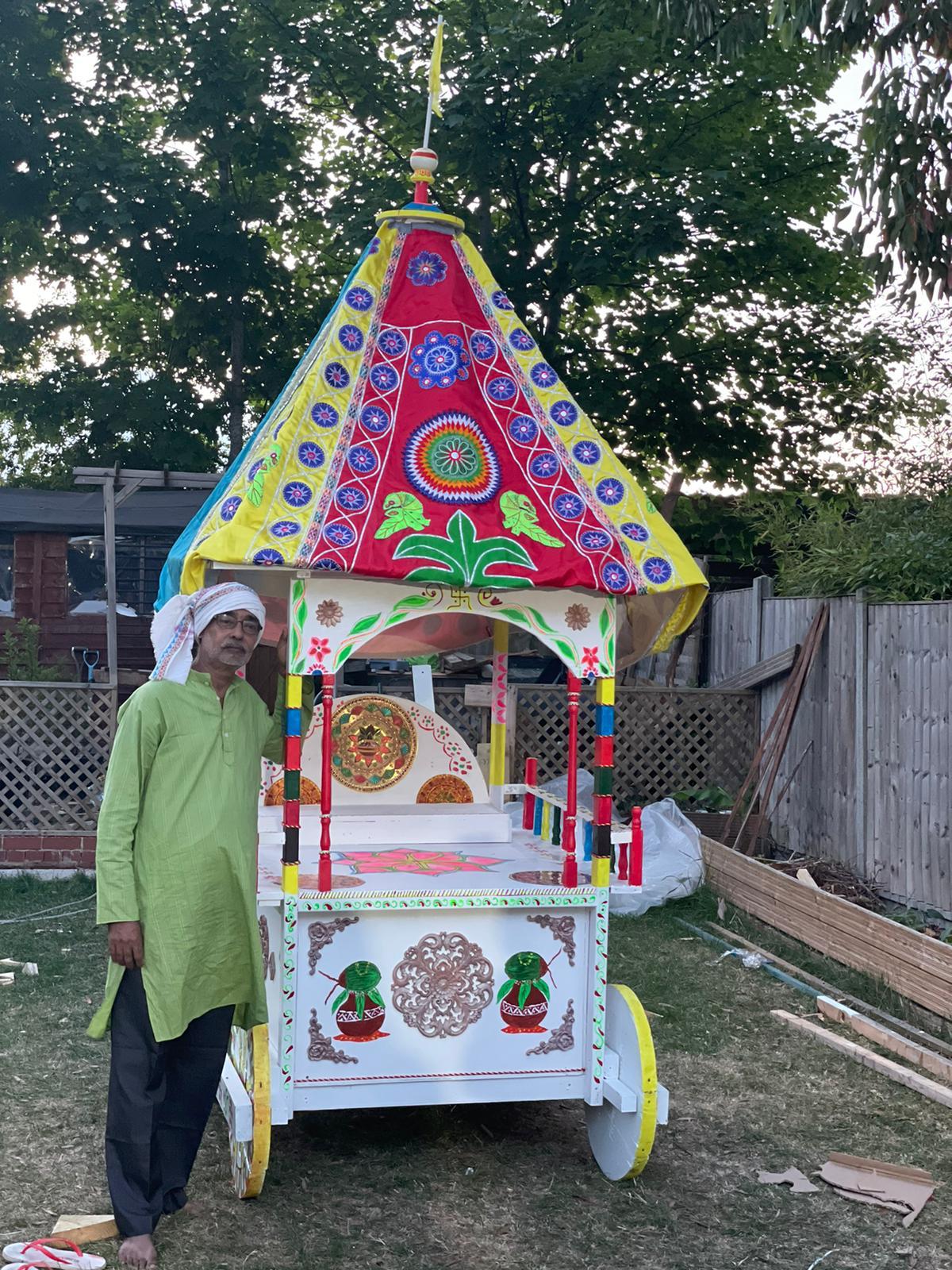
Ratha Nirmana 2022: The Sacred Art of Chariot Making
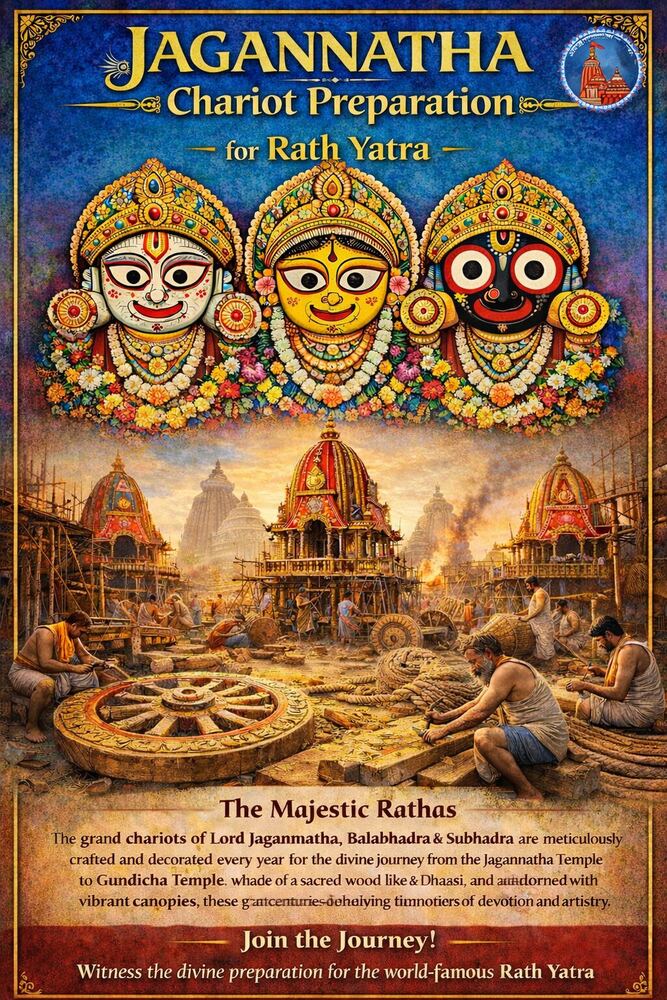
Every year, three brand-new chariots are built entirely from scratch for Lord Jagannath, Lord Balabhadra, and Devi Subhadra for the grand Ratha Yatra festival.
Event Details
The Sacred Tradition
No chariot is ever reused — each one is freshly constructed using traditional methods passed down through generations, without any modern machinery, blueprints, or formal engineering training. Before any work starts, temple priests bring the Agyan Mala (divine garlands) from the Jagannath Temple, granting sacred permission to the chief carpenters (Biswakarmas) to commence work.
The Craftsmen
Around 150–220 hereditary artisans — carpenters (Maharana Sevaks), blacksmiths, painters (Chitrakars), and tailors — work together at the Ratha Khala to bring the chariots to life.
Traditional Tools
Craftsmen use ancestral measurement systems and traditional tools like Mugdara mallets and Barishi axes — no modern machinery is involved.
Living Heritage
Skills and techniques are passed down through generations, making this one of the oldest living craft traditions in the world.
The Three Divine Chariots
| Feature | Nandighosha(Lord Jagannath) | Taladhwaja(Lord Balabhadra) | Debadalana(Devi Subhadra) |
|---|---|---|---|
| Height | 45 feet(13.5 m) | 44 feet(13.2 m) | 42 ft 3 in |
| Wheels | 16 wheels7 ft diameter | 14 wheels6.6 ft diameter | 12 wheels |
| Wooden Pieces | 832 | 763 | 593 |
| Colours | Red & Yellow | Red & Green | Red & Black |
| Charioteer | Daruka | Matali | Arjuna |
| Guardian | Garuda / Narasimha | Jayadurga | Jayadurga |
| Flag | Trailokya Mohini | Unnani | Nadambika |
Materials Used
Including Dharua, Phasi, and Asana
From 1,100 large logs and 865 smaller logs
Vibrant deity-specific colour schemes
Key Rituals During Construction
Ratha Anukula
The formal commencement ceremony with yajna (fire ritual) at the Ratha Khala on Akshaya Tritiya.
Nrusimha Chaturdashi
An image of Lord Narasimha is carved on each guja (supporting pillar) of the chariot wheels on this sacred day.
Chaka Dera Niti
The ceremonial fixing of the first wheel of each chariot, performed with mantras by the chief carpenters and temple servitors.
Pipili Appliqué Draping
The final decoration of chariots with colourful traditional cloth from Pipili artisans.
The Construction Process
Wheel Construction
Craftsmen carve the centre (Tumba), fix 16 spokes (Ara) to the rims (Pahi), and dig 40-foot-long trenches (Janta Gada) to assemble the massive wheel structures.
Frame Assembly
The frame (Danda) is mounted on the axle in an octagonal shape, followed by 40-foot-long cross beams (Gayala) forming the platform.
Final Structure
Vertical and horizontal beams along with columns are fixed to give each chariot its iconic temple-like shape.
Event Gallery